

Allen-Bradley
📢 100% genuine, extensive in-stock inventory, fast shipping!
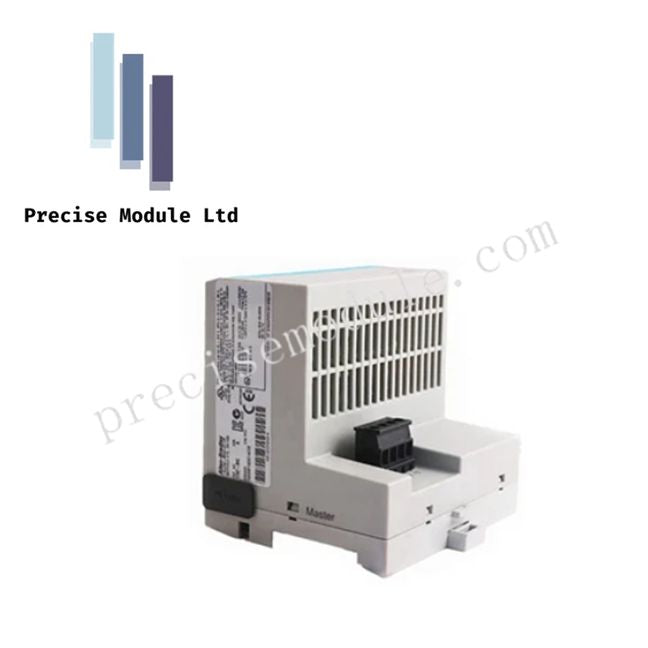
Allen-Bradley 1797-BIC | FLEX Ex Bus Isolator Module
Allen-Bradley 1797-BIC | FLEX Ex Bus Isolator Module
Manufacturer: Allen-Bradley
-
Product No.: 1797-BIC
Condition:in Stock
Product Type: Bus Isolator Module
-
Product Origin: USA
Payment:T/T, Western Union
-
Weight: 1000g
Shipping port: Shanghai/Yiwu/Shenzhen
Warranty: 12 months
Share
Product Description
Overview
The Allen-Bradley 1797-BIC (Part Number: 1797-BIC) is a specialized Bus Isolator Coupler designed for the FLEX Ex™ I/O system. It provides galvanic isolation and intrinsic safety for ControlNet communication, enabling high-speed digital signals to traverse safely between standard “Safe Area” networks and hazardous areas (Zone 1/Division 1). This module ensures that electrical faults, surges, or transients on one segment do not compromise the safety or operation of devices on another segment.
Core Features
-
Electrical Isolation: Provides high-level galvanic isolation, preventing high-voltage transients or ground faults from affecting connected devices.
-
Intrinsic Safety: Limits voltage and current to levels safe for explosive atmospheres, compliant with ATEX, IECEx, UL, and CSA standards.
-
Seamless ControlNet Integration: Supports 5 Mbps high-speed ControlNet communication without requiring a dedicated node address, maintaining full network transparency.
-
Compact Modular Design: Fits standard FLEX I/O footprint and requires the 1797-PS power supply for operation.
-
Diagnostic Indicators: Equipped with LEDs to display power and network link status for rapid fault identification.
Performance Characteristics
1. Hazardous Area Compatibility
Engineered to bridge standard and intrinsically safe networks, the 1797-BIC allows digital signals to enter hazardous zones safely, eliminating the need for bulky explosion-proof enclosures for each I/O module.
2. Robust Communication
Supports full ControlNet throughput of 5 Mbps while isolating electrical disturbances. Maintains signal integrity in high EMC or electrically noisy environments.
3. Galvanic Isolation
High-level isolation between the FLEX Ex™ backplane and ControlNet network prevents ground loops and protects the system from surges or faults originating in field devices.
4. Environmental Durability
-
Operating Temperature: -20°C to +70°C
-
Protective Coating: Conformal coating ensures resistance against chemical exposure, corrosion, and harsh industrial conditions.
Technical Specifications
| Feature | Specification |
|---|---|
| Model | 1797-BIC |
| Part Number | 1797-BIC |
| Module Type | Bus Isolator Coupler (ControlNet) |
| I/O Series | FLEX Ex™ (Intrinsically Safe) |
| Power Supply | 18–32 V DC, ~0.15 A |
| Power Consumption | 8.5 W |
| Isolation Voltage | 500 V AC rms (continuous) |
| Network Support | ControlNet (Coax) |
| Hazardous Locations | Class I Div 1 / Zone 1 (Output); Class I Div 2 / Zone 2 (Input) |
| LED Indicators | Power, ControlNet Link |
| Mounting | FLEX Ex™ modular slot |
| Standards Compliance | ATEX, IECEx, UL, CSA |
Key Application Benefits
-
Extends high-speed ControlNet communication into hazardous zones safely.
-
Reduces installation cost by avoiding individual explosion-proof enclosures for each I/O.
-
Maintains system reliability by isolating electrical faults and surges from sensitive control devices.
-
Simplifies maintenance with status LEDs for immediate troubleshooting.
FAQ
Q: Can the 1797-BIC be installed in Zone 1 hazardous areas?
A: Yes, it is designed to provide intrinsically safe outputs for Zone 1/Division 1 while the input resides in a Safe Area or Zone 2/Division 2.
Q: Does it require a special ControlNet configuration?
A: No, it operates transparently on the ControlNet network without a unique node address.
Q: What power supply is needed?
A: A 1797-PS FLEX Ex™ power supply is required, providing 18–32 V DC.
Q: How does it handle electrical surges?
A: Galvanic isolation and intrinsic safety circuitry protect connected devices from high-voltage spikes or ground faults.
Hot Tags :
- Choosing a selection results in a full page refresh.
- Opens in a new window.