


Bently Nevada
📢 100% genuine, extensive in-stock inventory, fast shipping!
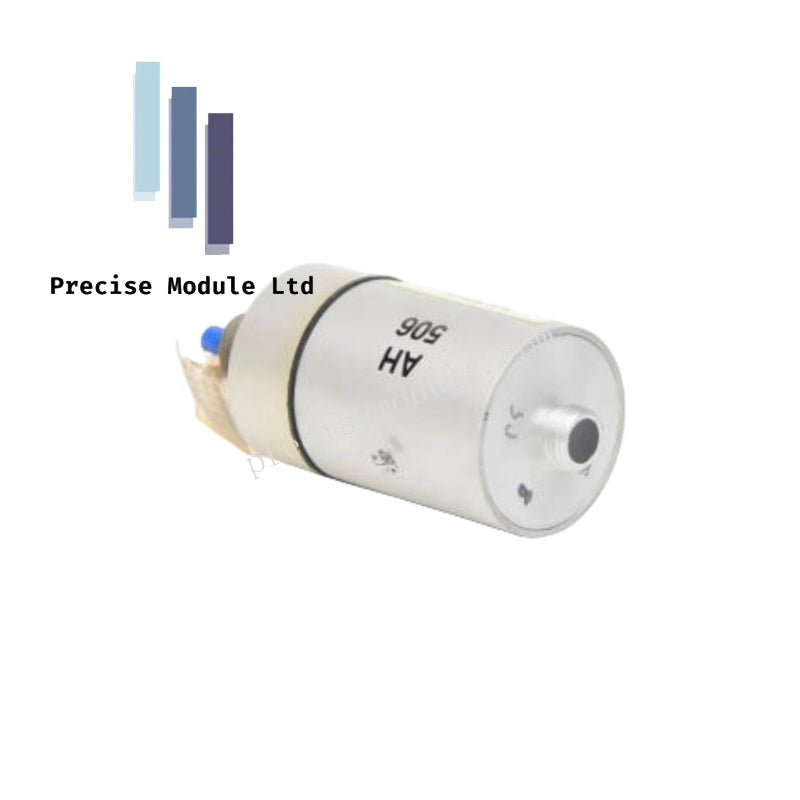
Bently Nevada 16699-01-02-02 Velocity Seismoprobe
Bently Nevada 16699-01-02-02 Velocity Seismoprobe
Manufacturer: Bently Nevada
Condition:in Stock
Product Type: Velocity Seismoprobe
-
Product Origin: USA
Payment:T/T, Western Union
-
Weight: 250g
Shipping port: Shanghai/Yiwu/Shenzhen
Warranty: 12 months
Share
Bently Nevada 16699-01-02-02 Velocity Seismoprobe
Configured for absolute casing and structural vibration monitoring in industrial rotating machinery, the Bently Nevada 16699-01-02-02 (16699 Seismoprobe Velocity Transducer) provides direct physical/electrical execution.
Suffix Breakdown & Model Matrix
| Option Code | Parameter | Description / Standard Specifications |
|---|---|---|
| 16699 | Product Series | Seismoprobe Velocity Transducer |
| -01 | Sensitivity | 500 mV/in/sec (19.7 mV/mm/sec) |
| -02 | Mounting | Stud-mount version (1/4-28 UNF) |
| -02 | Connector | MIL-C-5015 2-pin top-exit connector |
Hardware Specifications
| Parameter | Specification |
|---|---|
| Model | 16699-01-02-02 |
| Brand | Bently Nevada |
| Origin | USA |
| Weight | 0.25 kg |
| Dimensions | 63.5 mm diameter x 101.6 mm length |
| Operating Temp | -29 deg C to +100 deg C |
| Power Consumption | Passive (Self-generating) |
| Sensor Type | Moving-coil velocity transducer |
| Frequency Range | 4.5 Hz to 1,000 Hz |
Rotor Dynamics and Signal Integrity
The 16699-01-02-02 utilizes ruggedized moving-coil technology to convert mechanical velocity into a linear voltage output, supporting high-fidelity rotor dynamics assessment. Unlike solid-state transducers, this device is inherently passive, eliminating the need for gap voltage validation or external excitation sources. Signal integrity is maintained through precision coil damping, which offers superior resistance to impulsive excitation compared to active accelerometer-based integrators. By design, the unit provides internal cross-talk suppression against stray electromagnetic fields, ensuring that the velocity output remains accurate in high-noise machinery environments.
Frequently Asked Questions
Q: Is this sensor compatible with high-temperature environments?
A: The transducer is rated for operation up to +100 deg C. For applications exceeding this temperature, ensure appropriate thermal shielding or cooling is applied to the bearing housing interface to prevent internal coil degradation.
Q: Can this transducer be used for portable diagnostics?
A: Yes. Because the transducer is a self-generating two-wire passive device, it is highly suitable for portable vibration measurement applications where external power supply infrastructure is unavailable.
Field Installation Guidelines
- Surface Preparation: Ensure the mounting location is machined flat and free of debris. Use the provided 1/4-28 UNF stud to achieve a rigid mechanical coupling.
- Torque Specifications: Apply a torque of 3.4 Nm to the mounting stud. Proper torque is essential to ensure the transducer's resonant frequency remains within the specified linear operating range.
- Connector Alignment: Mate with a standard MIL-C-5015 2-pin connector. Verify that the sealing O-ring is seated correctly to prevent moisture ingress.
- Signal Shielding: Use high-quality shielded twisted-pair cabling. Ground the cable shield at the monitor rack terminal only to avoid creating ground loops that introduce electrical noise.
- Orientation: Align the transducer's sensitive axis with the target vibration vector. Avoid mounting in orientations that exceed 90 degrees from the intended measurement plane to maintain sensitivity.
Hot Tags :


- Choosing a selection results in a full page refresh.
- Opens in a new window.